
On a two-day trip from one daughter in Ohio’s Western Reserve to the other daughter in Chicago we were following the “blue highways” (shunpiking on US and state routes and shunning the Interstates) we happened on the delightful city of Wellington, Ohio. Struck by it’s beautiful town hall, we spontaneously stopped for a closer look.
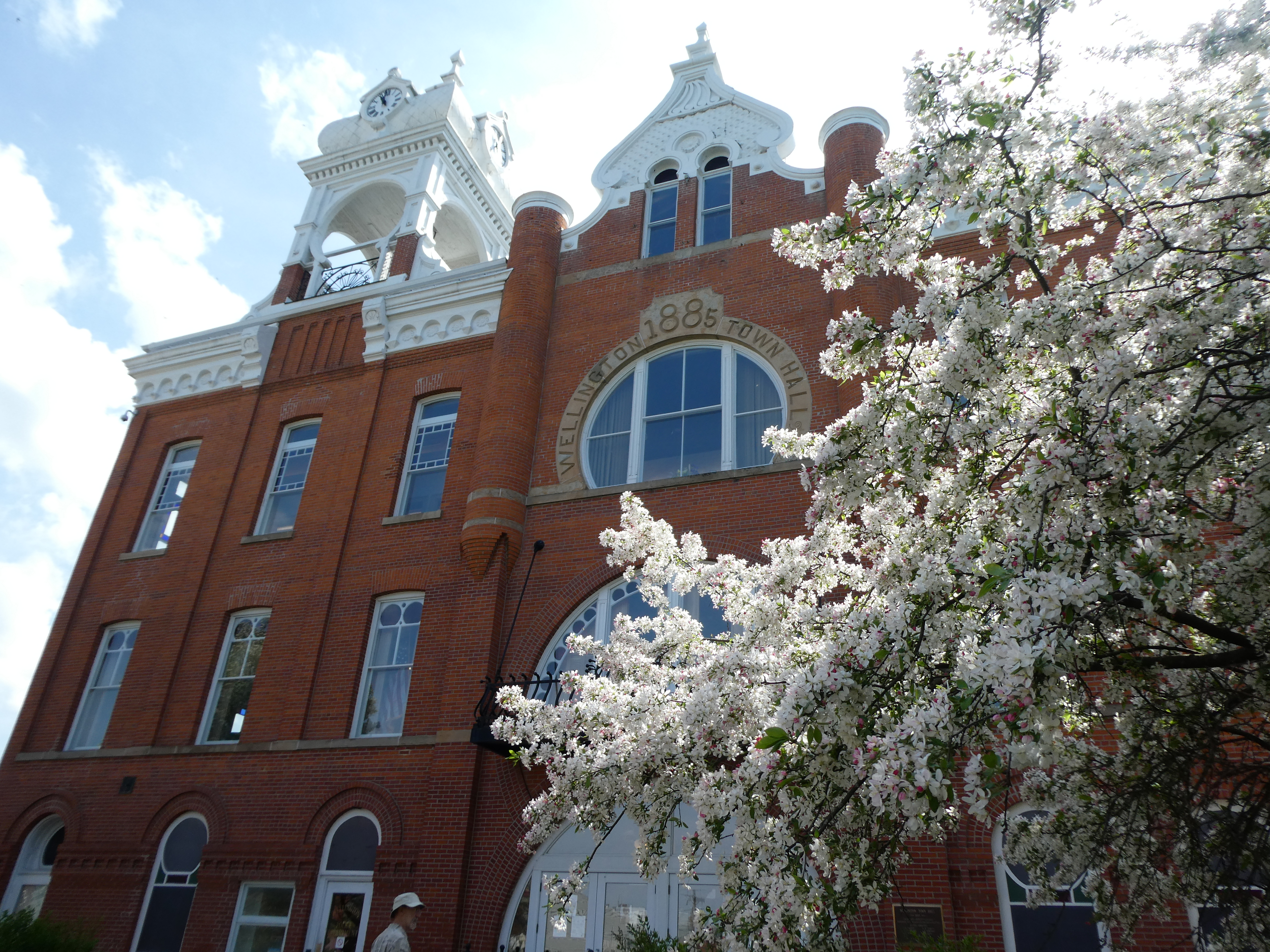
Wellington Town Hall
We met Scotty, the town historian, supervising the spreading of mulch in front of the town hall in preparation for a Mother’s Day event and learned that Wellington has several claims to fame.
In 1858 its citizens, along with a few from Oberlin, violated the Fugitive Slave Law of 1850 that allowed federal marshals to assist slave owners to recapture runaway slaves. The citizens wrested John Price at gun-point from a federal marshal in the American House Hotel in Wellington and assisted his journey to Canada. The federal trial of the thirty-seven citizens attracted national attention and helped polarize public opinion about slavery and hasten the Civil War.
Spurred by the arrival of the New York Central Railroad in 1849, the Horr brothers realized that they could now ship local milk to distant markets if they could preserve it since refrigeration was still dependent on blocks of ice. They built the first cheese factory in Wellington. By 1878, Wellington was the “cheese capital of the world” with over 40 cheese factories in town. That year the Horr-Warner company shipped 6,000,000 pounds of cheese and 1,000,000 pounds of butter. Like so many businesses, technology changed, mechanical refrigeration became widely available so whole milk in addition to milk products could be shipped long distances, and the market collapsed. Not one cheese factory remains in Wellington. But a legacy of fine old houses of the cheese barons and workers does.
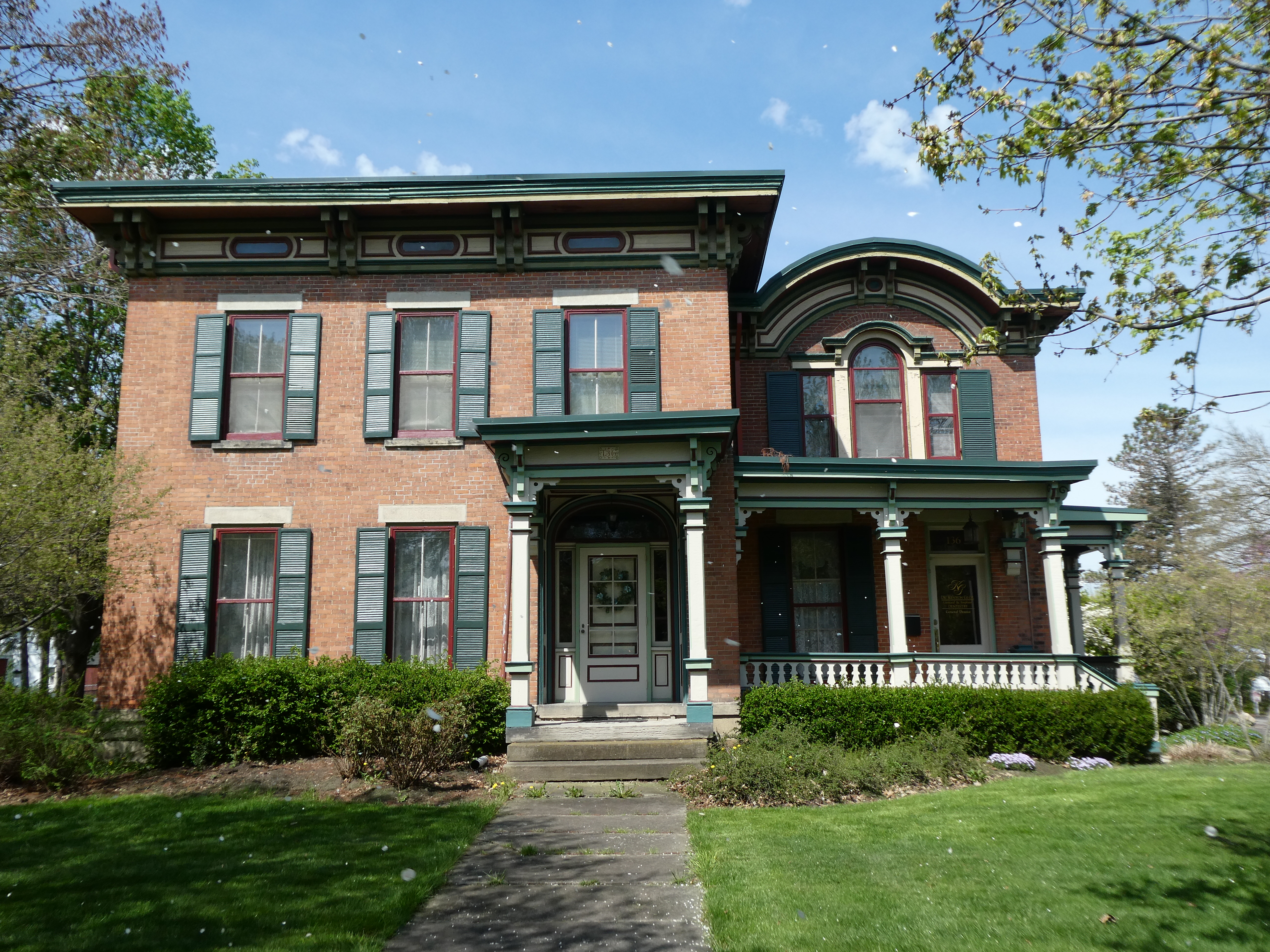
Wellington Legacy
There is more to Wellington’s, and America’s, story, but I’ll let you discover that for yourself on the blue highways.