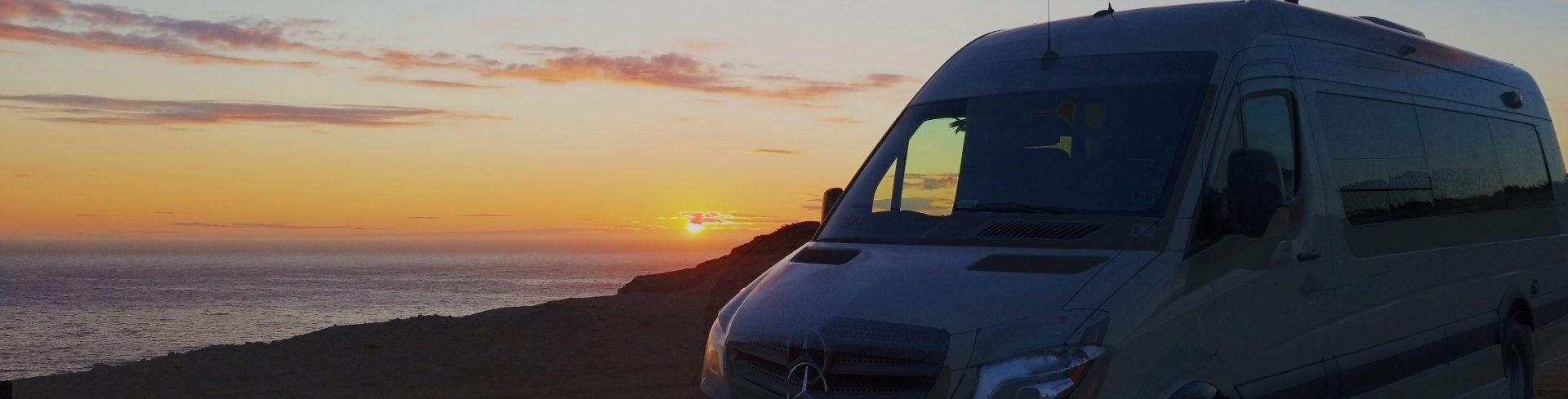
Wednesday started rainy, cloudy, and windy, at the Lobster Cove Lighthouse parking lot, Lobster Cove. NL
Both of us woke up too early. We could hear the rain on the coach. Tried to go back to sleep but got up early instead, got dressed, had breakfast and used the nice facilities they had there. Afterward we continued driving up the Viking Trail Highway along the Long Range Mountains past Three Mile Rock, Portland Creek Pond, River of Ponds, and Hawke’s Bay, turning off onto the road to Port au Choix.
There is archeological evidence throughout Newfoundland of at least 5,000 years of habitation by humans. By the early 1500s, Europeans had discovered and begun exploiting the abundant whales and fish in the waters around Newfoundland. Many current communities are highlighting that history in an effort to attract tourists as their traditional economies have declined.
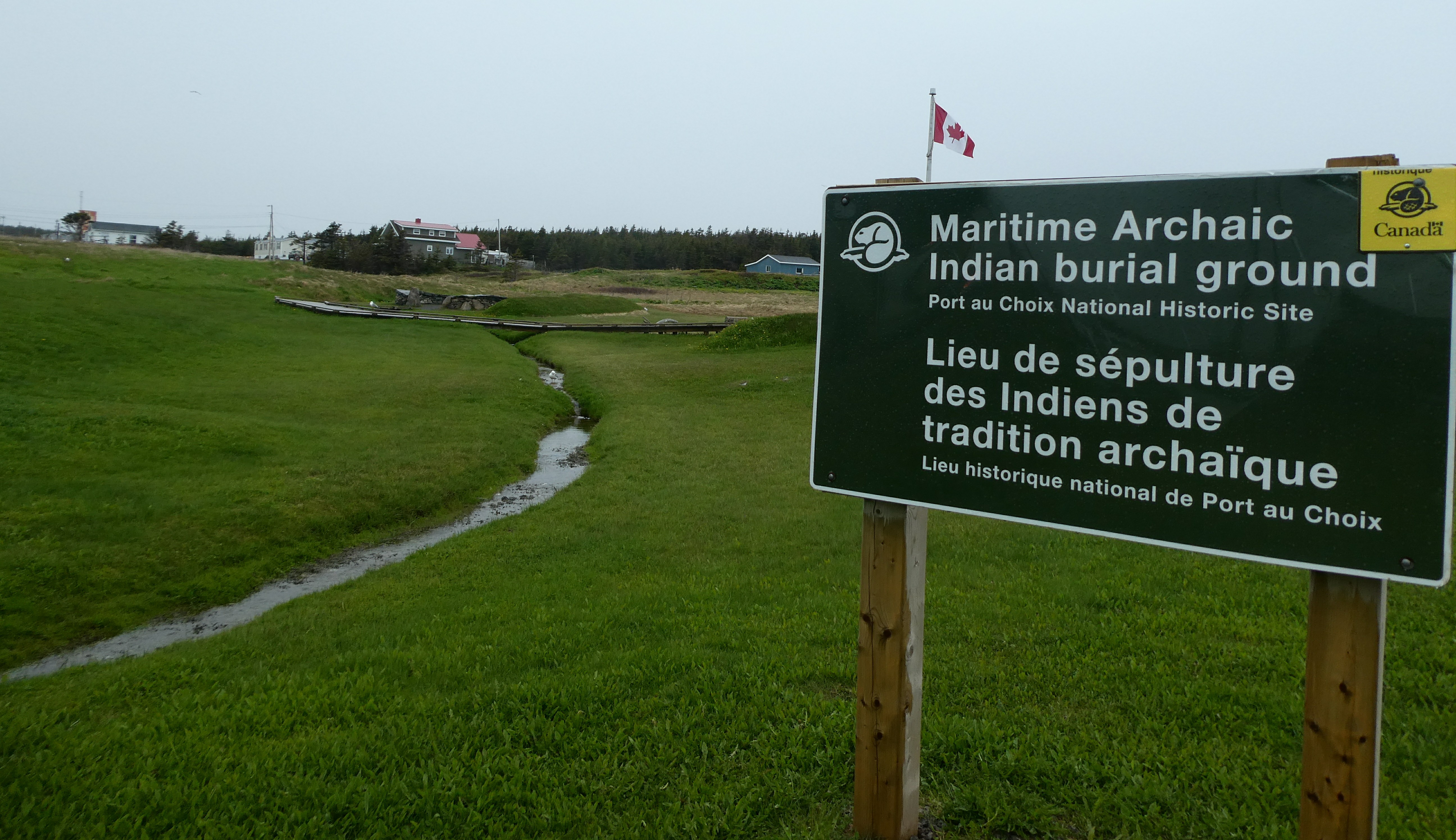
Port au Choix is one of those communities. We stopped first at the French Rooms Cultural Center which tells much of the story. It is right next to a 4,500 year old burial ground of the Marine Archaic Indians. Those people were followed by the Groswater and Dorset Paleoeskimos who occupied nearby Phillip’s Garden between 2800-1300 BC. They are followed by the Recent Indians, ancestors of the Beothuk who were displaced by the Europeans beginning in the early 1700’s starting with the Basques who named the place “Portuxoa” meaning the little port.
Then as the French and English won or lost various battles and wars, fishing and settlement rights shifted around. From 1713 until 1904, France had the right to fish off the coast and process their catch on the coast, but not settle the coast. Exactly what part of the coast of Newfoundland was the French Shore changed with the Treaty of Versailles in 1783. Finally, in 1904, France relinquished all fishing rights but retained two little islands off the southern coast.

Because fishing was so central to life in Newfoundland, every little bay or harbour that could support fishing and fish processing by a family or two, did. And the rocky, rugged coast has many such bays.

In the late 1940’s, after Newfoundland voted to join the Canadian Confederation and become a Province, the Provincial government decided that a modern economy couldn’t be sustained if most of the population lived in isolated little communities accessible only by boat and only part of the year.
From 1954 to 1975, several programs to consolidate, or resettle, the population were enacted. Certain communities were designated as “growth centers” for which roads, schools, and health facilities were supported. Many other communities were encouraged and supported to move. Nearly 300 communities were abandoned and 28,000 people were relocated.
Port aux Choix was chosen as one of the growth centers. The French Rooms has a home movie of a family floating their house from its original outport to Port au Choix.
After the French Rooms we walked, during a small break in the rain, to the Anchor Inn for lunch of moose burger and fries for Hanson and fried Halibut and chips for Janice; both very good.
Then we drove to the French outdoor oven which was making buns with jams made from native Newfoundland wild berries, blueberries and partridge berries (Lingonberry) and coffee, hot chocolate, or teas for $7.50/person. We were early so we got a chance to chat with Millie and Audrey who heated the oven with wood and baked the rolls for all of us.

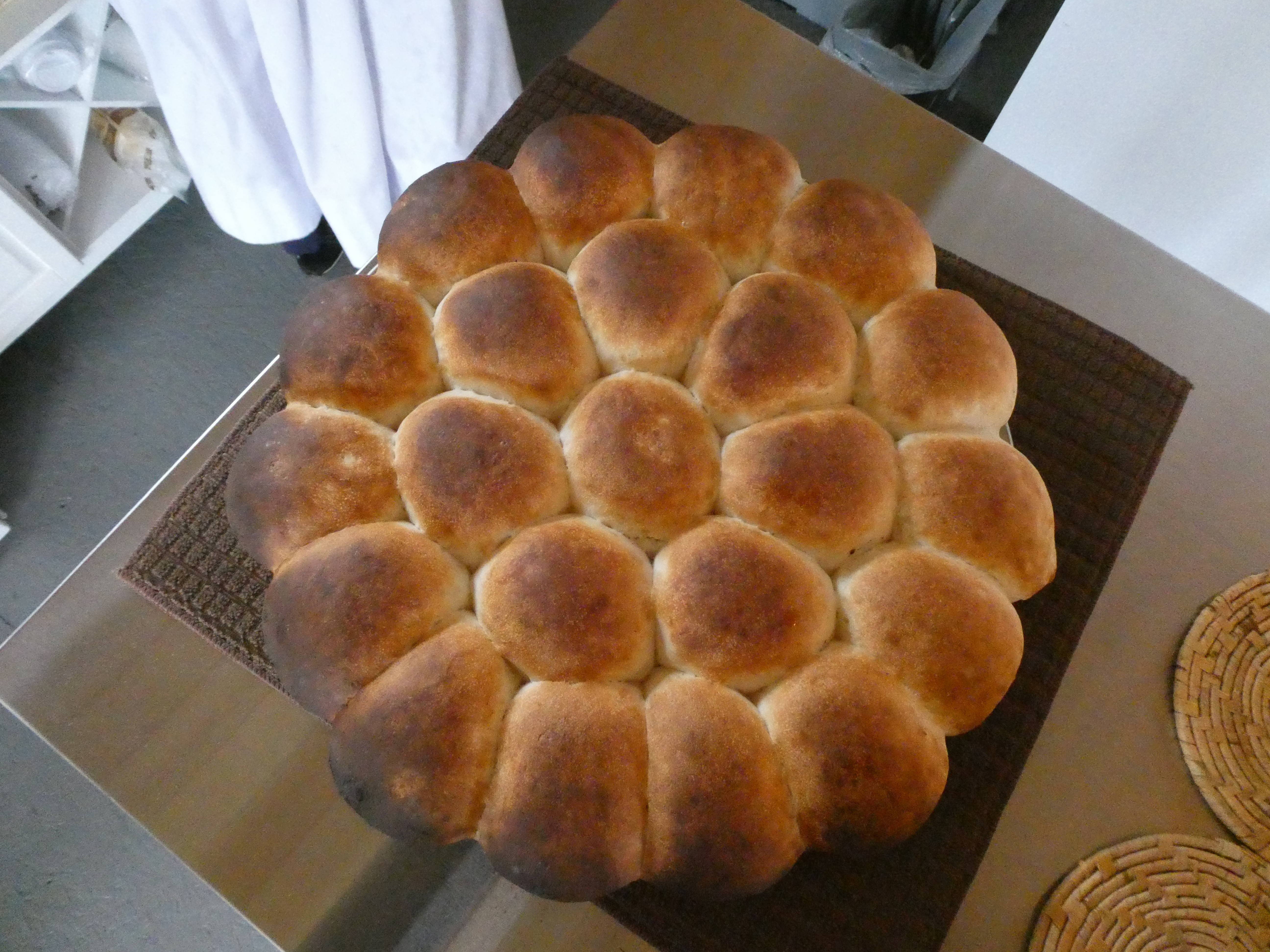
We liked the partridge berry jam best and bought a small jar for $5. Janice asked Millie if we could boondock on the patch of gravel before the National Historic Site began for the Barbace Cove area. Since she RVs in Quartzsite too, she said sure.
Drove to the Visitor Center for the National Point Riche Historic Site and used our passes to view the exhibits on the ancient Indians. The rain and winds were so fierce they almost tore the van door out of Janice’s hands when she got out. The rain had stopped by the time we had driven down to see the lighthouse at Point Riche and the monument to the Dorset people.

We drove back to the French bread oven place and parked and made Greek Lemon soup and paired it with white wine for supper. The sun came out but the wind was still fierce. We finally were able to get photos of the replica French Chaloupe boat that were used historically to fish these shores for cod.
